hero background image

AI in fintech: use cases, solutions,
trends & implementation challenges

December 2, 2025

Top use cases of AI in fintech

Fraud detection

Compared to traditional systems, which rely on limited sets of manually encoded rules to trigger a response, ML-powered fraud detection solutions autonomously recognize a wider range of anomalies that can be signs of fraudulent activities and ensure a lower rate of false negatives. Furthermore, these systems can identify new unconventional patterns and outliers as they process “fresh” data, learning to detect emerging threats. This results in faster and more cost-efficient fraud prevention operations.

  • Prevent market manipulation,
    such as spoofing and wash trading, by monitoring and cross-checking brokers’ activity to spot anomalies or inconsistencies, such as placing and then immediately canceling large orders.
  • Fight money laundering
    by tracking anomalous transactions, including large sums exchanged by newly established corporations registered in tax havens.
  • Identify credit card fraud
    by spotting anomalous account behavior and purchase patterns, such as multiple payment methods added in a short timeframe.

Credit scoring

AI systems can automatically assess the creditworthiness of customers asking for a loan, generating accurate risk profiles based on hundreds of parameters and the subtle relationships between them, which are difficult to identify for rule-based systems. This helps organizations minimize customer risk, speed up underwriting, and eliminate bias.

  • Determine who qualifies for a loan
    based on customer data from credit histories, tax returns, business balance sheets, and other sources.
  • Define a suitable credit limit
    by estimating customers’ disposable income and actual ability to make regular loan payments.
  • Calculate a competitive interest rate
    based on risk scores and market trends to maximize profit without alienating the customer base.

Trading & investments

Using machine learning and deep learning algorithms, financial software can process data streams in real time to uncover non-linear patterns that rule-based systems would otherwise struggle to capture, allowing them to interpret and forecast complex market trends. Furthermore ML systems continuously learn from new data and adapt to evolving economic conditions to maintain predictive accuracy. This enables financial firms and private investors to continuously fine-tune their trading and investment strategies and maximize profits.

  • Predict stock price fluctuations
    and market volatility based on global financial trends, companies’ financial statements, or investor sentiment on social media and optimize portfolio investments accordingly.
  • Provide automated financial advice and assistance
    with financial planning and portfolio management operations through robo-advisors.
  • Enhance algorithmic trading
    with machine learning to expand the range of rules and factors considered when automatically executing trade orders.

Customer experience optimization

Banks and other financial organizations are increasingly relying on artificial intelligence to meet customer expectations for more intuitive and tailored services, establish meaningful connections with clients, and improve their engagement. AI-driven personalization goes far beyond simple segmentation rules, with systems designed to interpret each customer’s tone and sentiment across interactions to offer relevant and context-aware assistance.

  • Launch targeted marketing campaigns
    to engage potential and current clients with personalized ads, maximizing lead generation and minimizing churn.
  • Provide clients with product and service recommendations
    tailored to their financial goals or assist users with transactions and other operations via chatbots, virtual assistants, and other conversational AI tools.
  • Seamlessly validate transactions or access sensitive information
    in digital banking or trading apps through voice-based or computer vision face authentication.
  • Facilitate financial product design
    by generating product concepts tailored to the needs and preferences of specific market segments thanks to GenAI-based assistants.

Accounting & reporting

Agentic AI solutions powered by generative AI outperform traditional software bots in automating financial and accounting workflows thanks to their superior context understanding and ability to handle exceptions (such as report inconsistencies). These tools can speed up document processing, data entry, and other clerical tasks while preventing human error.

  • Automatically compile P&L statements
    summarizing the revenues and expenses of a company based on data combined from multiple financial reports.
  • Streamline bank reconciliation
    by cross-checking the balance of a bank account with that reported in the most recent bank statement to spot inconsistencies.
  • Automate accounts payable and receivable,
    including invoice generation, sending of payment reminders, and financial data validation.

Enhance your financial services offering with AI

Turn to Itransition

Examples of AI-powered fintech tools & services

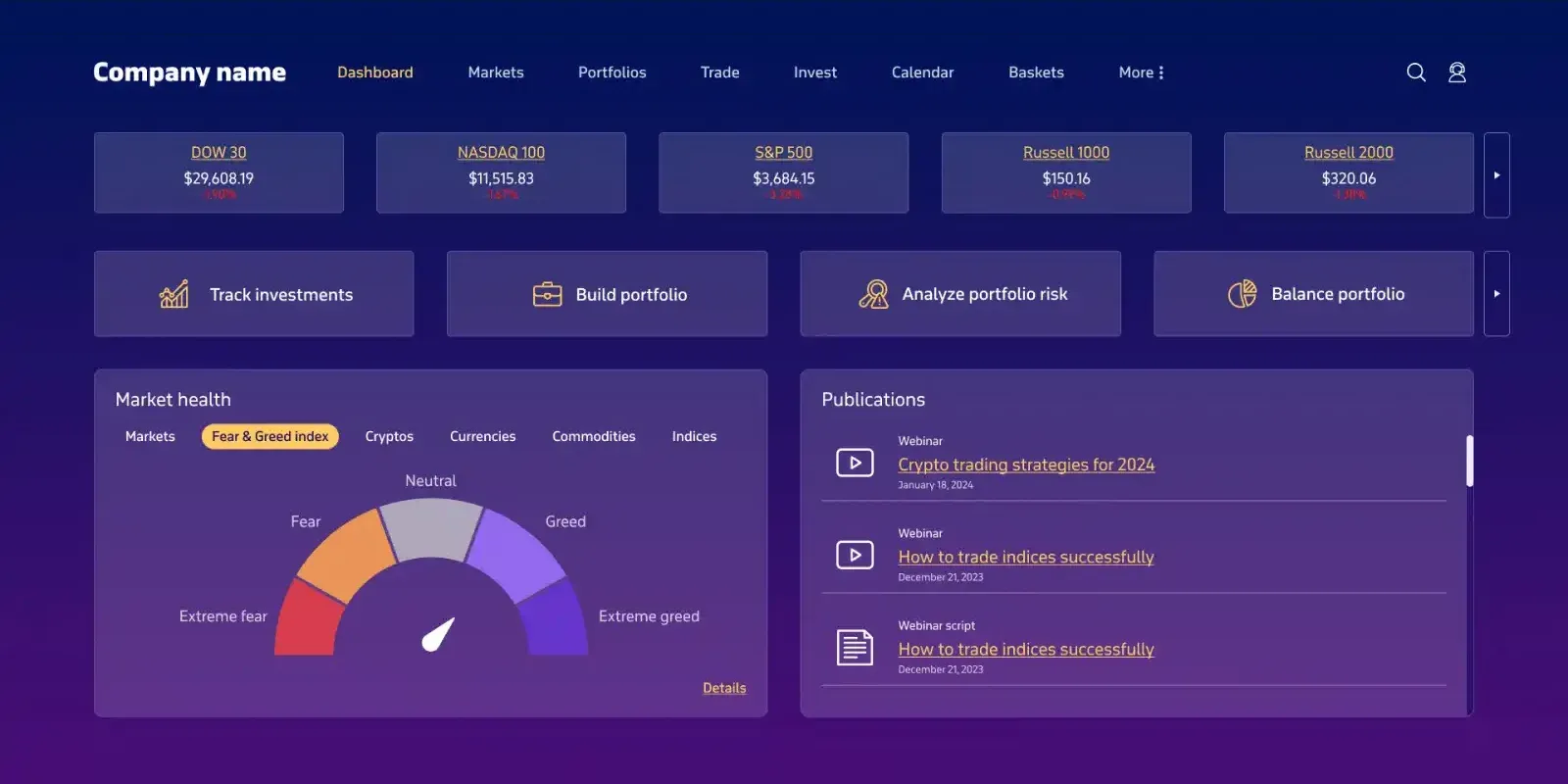
TradeSmith's flagship product is an investment portfolio management platform with predictive analytics capabilities that helps users monitor their investments and manage portfolio risk. The solution can analyze stock behavior, make ML-powered price and trend predictions, and notify users when the stock prices go up or down, suggesting the best time to close a position.

Dashboard

Image title: Dashboard

ComplyAdvantage offers a comprehensive fraud detection solution relying on machine learning models to identify various fraudulent scenarios, including identity theft, medical insurance scams, card flipping, and more. The system, deployed by financial services companies like Holvi and Banco Santander, can also track flows of illicit funds and spot clusters of fraudulent accounts controlled by a single criminal organization.

Video thumbnail

Temenos recently launched Product Manager Copilot, a GenAI-powered virtual assistant to help financial institutions design retail banking products aligned with customer expectations and relevant regulations. Product, IT, and customer service managers can derive insights into customer behavior and preferences, competitor offerings, and the regulatory landscape by interacting with the solution in natural language. Furthermore, the AI copilot can generate product descriptions and create test plans to assess new products.

Video thumbnail

Aimed at providing customers with a highly interactive user experience, the Bank of America integrated its mobile banking app with Erica, a virtual financial assistant powered by natural language processing. This advanced chatbot for customer support can monitor monthly spending and recurring charges, help replace stolen cards, send alerts and reminders, and track past transactions.

Video thumbnail

Capgemini’s AI.Receivables includes tools designed for frictionless cash and collections processes through AI-driven automation and analytics. This solution can help your workforce execute order-to-cash operations and predict which customers are likely to default, suggesting proactive measures to mitigate business risk. The potential outcome is a 40% improvement in days sales outstanding.

Video thumbnail

Statistics on AI in the fintech industry

Market trends & investments

The global AI in fintech market was estimated at $27 billion in 2024 and is expected to reach US$79.4 billion by 2030, growing at a CAGR of 19.7%

Research and Markets

The financial industry's AI spending is projected to grow from $35 billion in 2023 to $126.4 billion by 2027

Statista

Growth in AI platforms spend (2023-2024e)

Bubble size: total AI platforms spend (2024e)

Scheme title: AI platforms spend by industry
Data source: WEF

AI platforms spend/total revenues (2024e)

Areas of application

In 2024, data analytics was the leading AI application among financial services firms (adopted by 57% of companies), followed by generative AI which saw the strongest year-over-year adoption growth

Statista

In 2024, the top AI use cases that financial firms invested in included risk management (36%), portfolio optimization (29%), fraud detection (28%), and algorithmic trading (27%)

NVIDIA

Nearly three-quarters of companies already use AI in financial reporting, and this share is expected to rise to 99% by 2027

KPMG

The top use cases for generative AI in terms of ROI are trading and portfolio optimization (cited by 25% of respondents), followed by customer experience and engagement (21%)

NVIDIA

Adoption payoffs

According to nearly 70% of financial services professionals surveyed, AI has driven a revenue increase of 5% or more. Furthermore, over 60% of respondents said AI has helped them reduce annual costs by 5% or more

NVIDIA

Financial services companies that have adopted artificial intelligence have seen an average 20% increase in productivity in software development, customer service, and other areas

Bain & Company

37% percent of financial services professionals surveyed reported improved operational efficiency thanks to AI adoption, while 26% mentioned enhanced customer experience as a key benefit

Statista

Implementation roadblocks

70% of financial services companies reported AI talent gaps across functions, especially in technical fields, risk management, andregulatory compliance

Bain & Company

75% of financial services executives cite complex regulatory developments as the primary factor undermining confidence in AI investments

KPMG

Scheme title: Challenges of AI exploration in financial services
Data source: NVIDIA

Benefits of using AI-powered fintech solutions

Enhanced decision-making

Artificial intelligence solutions can analyze larger volumes of data than traditional software and identify deeper and more complex dependencies, providing financial firms with accurate insights and predictions to make better trading, investment, and budgeting decisions.

Operational cost savings

While non-AI solutions driven by clear rules could automate relative straightforward operations, AI systems can now handle complex workflows by choosing the best course of action to achieve a set goal in full autonomy, helping companies further improve operational efficiency and mitigate related costs.

Improved customer experience

Modern solutions powered by conversational AI can handle 50-70% of customer interactions in full autonomy, enabling 24/7 support. Combined with AI-based customer analytics software, conversational AI tools can also deliver tailored service suggestions for more personalized experiences.

Effective risk management

AI-based anomaly detection and predictive analytics systems enable financial organizations to assess and mitigate fraud, investment, and credit risks by accurately identifying outliers and forecasting future trends and occurrences.

Common challenges of implementing AI in fintech

AI implementation in the financial sector can be trickier than expected due to a combination of business and technical roadblocks. Here are some guidelines and best practices to overcome the most common adoption challenges.

Challenge

Solution

Data quality & availability
Artificial intelligence is a data-driven technology. Any system powered by an AI model requires vast amounts of data or streams of real-time information to be properly trained and to deliver accurate output.
  • Map available sources to gather reliable, high-volume datasets. Depending on the use case, suitable sources can include market data providers (Bloomberg, Nasdaq, S&P Global, etc.), credit rating agencies, law enforcement or government watch lists, public records, or connected devices such as ATMs or POSs.
  • Enable data exchange between the AI solution and other corporate systems or third-party services by configuring application program interfaces (APIs), middleware, or other integration options.
  • Set up an ETL pipeline to integrate heterogeneous data from available sources and consolidate it into a NoSQL database, data lake, time series database, or other data storage. You can use cloud data integration services to facilitate this process.
Data privacy & cyber security
In a highly regulated industry like finance, with organizations and service providers managing sensitive information on a daily basis, the data-driven nature of AI can draw the attention of regulatory bodies and raise privacy and security concerns among the customer base. Furthermore, it makes these solutions a potential target for cyber attacks.
  • Whenever possible, use data anonymized through obfuscation techniques such as shuffling or substitution to train your AI models.
  • You can mitigate the cyber exposure of your solution with multiple security mechanisms and techniques. These include encrypted data exchange, identity and access management based on a zero-trust approach, multi-factor authentication, user activity monitoring, and regular risk assessments via penetration testing.
  • Implement data governance policies and procedures defining how data should be handled and shared across your enterprise.
Workforce skill gap
Many financial organizations can lack the in-house expertise to implement and take advantage of AI. At the same time, the job market suffers from a general shortage of specialized talent, making recruitment more difficult.
  • Create external partnerships with specialists in relevant fields to complement your staff’s expertise without hiring and training additional workforce. The rising adoption of remote work models and collaboration software can simplify this process.
  • Proactively invest in reskilling and upskilling initiatives to help your workforce become familiar with AI software and thus facilitate user adoption.
  • Assemble a pilot group of early adopters to try out the solution and then extend implementation to the whole organization, leveraging their experience and feedback to help new users.
Management buy-in & ROI
AI-powered solutions are typically more challenging, time-consuming, and financially demanding to implement than traditional, non-AI software due to their complex architecture, long training process, and substantial computing demands. This can make it more difficult to secure stakeholder and executive buy-in and achieve the expected ROI.
  • Prioritize the most important and profitable corporate functions depending on your business scenario or target those suffering from severe inefficiencies that can’t be solved with non-AI technologies.
  • Involve AI consultants to select a suitable tech stack for your solution based on your budget and existing IT environment. AI experts can recommend open-source frameworks and other development tools to minimize licensing fees.
  • Instead of developing a custom solution, consider building it on top of AI platforms from top cloud providers, which offer built-in AI algorithms, pre-trained AI models, and scalable computing resources. This can help you speed up the development process and reduce upfront project costs.

Itransition offers end-to-end AI services to help financial companies build, adopt, and scale artificial intelligence solutions fully aligned with your business requirements.

AI consulting

AI consulting

Our consultants can help you address key aspects of your AI project, including business analysis, solution design, budgeting, and user adoption, to overcome potential roadblocks and speed up software delivery.

AI development

We deliver AI solutions that enable you to automate your operations and enhance decision-making, taking care of data preparation, AI model training, front-end and back-end development, software integration, and support.

Gaining an edge with AI-driven fintech

Gaining an edge with AI-driven fintech

Challenged by fierce competition, complex market dynamics, and customer demand for personalized user experiences, financial institutions have pinned their hopes on AI advancements, which are already delivering promising results across business domains.

That said, fintech companies and other organizations shouldn’t approach AI as a purely “plug-and-play” tool, since its successful implementation calls for expertise, ongoing human supervision, and interconnected IT environments. Consider relying on Itransition’s experience in AI-related projects to meet these requirements and facilitate AI adoption across your organization.

Drive digital transformation with Itransition’s AI solutions

Let’s talk

FAQs

The use of AI enables financial institutions to boost revenues through service personalization, lower costs due to automation, and identify new business opportunities via data analysis, gaining a competitive edge in a crowded market landscape.

According to KPMG estimates, over 70% of organizations already rely on AI technology in finance, and 41% of them report using it to a moderate or high extent. However, adoption varies by region, with companies in North America, Asia-Pacific, and Europe leading the way.

Based on available surveys and reports, we can expect three major trends regarding the role of AI in financial technology and the financial services industry as a whole:

  • Financial firms will massively increase their investments in artificial intelligence, driving the growth of the global AI in fintech market.
  • Generative AI is the fastest growing segment among AI-related technologies, proving that businesses consider it one of their top tech priorities.
  • AI will drive revenue growth in the coming years by enabling more personalized financial services, enhancing customer experiences, and improving security.