hero background image

Computer vision in retail: use cases,
examples & implementation guidelines

February 19, 2026

Computer vision use cases & real-world examples in retail

Inventory management automation

Computer vision has a lot to offer when it comes to streamlining inventory management operations, with automated stock level monitoring being the top use case. Instead of manually scanning each product in the sales floor and backroom, retailers can use AI-powered cameras, fixed or mounted on robots, and image recognition software to identify and count products on shelves, detect empty spaces, and alert staff about the need for restocking. Computer vision solutions can also help retailers ensure planogram compliance in the store, verifying whether products are correctly displayed in the right aisle. Furthermore, these solutions can identify damaged packages to help ensure product integrity, as well as verify that shelf price tags match the respective products and the prices recorded in the POS system.

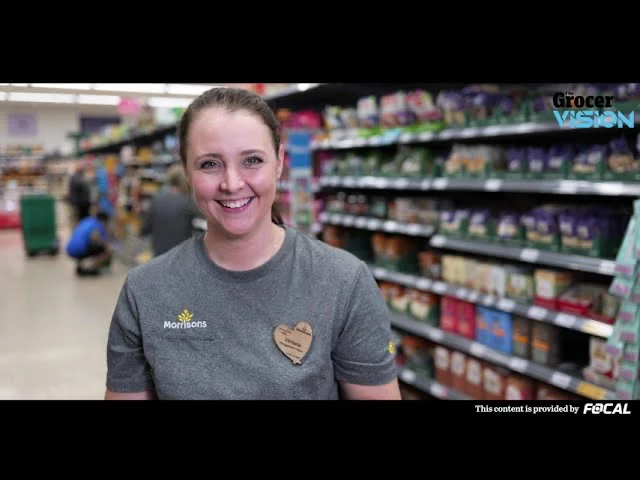
In 2024, UK supermarket chain Morrisons adopted a similar solution provided by Focal Systems to improve stock availability and staff efficiency. AI-based cameras constantly monitor shelves to identify out-of-stock or low-stock products, restocked items, and cases of planogram non-compliance, helping employees quickly replenish empty shelves and focus on customer service.

Video thumbnail

Retail store layout optimization

Along with its process automation potential, computer vision technology can also generate insights for strategic retail design decisions by monitoring customer behavior within stores. For instance, video analytics software can track foot traffic, identify popular routes or sections that are often ignored, and provide store layout recommendations for optimal product placement, such as complementary items displayed together to foster buying decisions. These systems can also generate heat maps to highlight high-density aisles or areas with longer dwell times, including promotional displays and advertisements, helping retailers assess their effectiveness based on customer engagement.

One example is the American energy company Phillips 66 that implemented an AWS-based computer vision system across its gas stations' convenience stores to derive actionable insights from point-of-sale footage. The solution, named Connected Store, provides multiple benefits, from identifying optimal promotional spaces based on customer behavior to alerting staff when stocks are running low.

Video thumbnail

Automated checkout

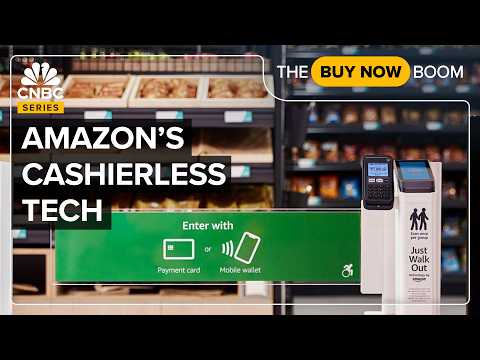
In an effort to minimize wait times at checkout lines, many retail companies offer self-checkout options, which enable customers to manually scan and pay for items at a kiosk. Cashierless stores represent a step forward, with fully automated checkout systems that leverage computer vision to track customers picking products off the shelf, recognize each item, and add it to the customer's virtual shopping cart. These solutions typically identify shoppers via an app or card swipe upon entry and automatically charge their accounts as they leave the store.

Convenience store chain Amazon Go pioneered this grab-and-go approach with its “Just Walk Out” technology. Amazon's initiative proved especially effective when implemented in small retail environments, such as corner stores, and the company is now focusing on implementing it across third-party stores in NFL stadiums, airports, and colleges.

Video thumbnail

Virtual try-on

Virtual try-on solutions rely on a combination of computer vision and augmented reality, allowing customers to digitally try on clothes, cosmetics, and other types of products via in-store smart mirrors or their mobile devices. These systems analyze camera feeds to map key facial and other body features, such as eye shape for makeup or build for shirts, track the user's movements in real time, and precisely overlay a 3D model of the selected product onto a live image of the customer.

One the world's largest cosmetics companies, L'Oréal is also a leading provider of virtual try-on technology, with its AI and AR division ModiFace licensing virtual try-on solutions to other major beauty brands such as Maybelline and Lancome. Modiface uses deep learning to track and render face, hair, and nails, so that the visualization can automatically adapt to different skin tones and lighting conditions for maximum accuracy.

Virtual try-on

Image title: L'Oréal’s ModiFace rendering feature
Image source: ModiFace

Visual search & contextual commerce

Visual search is a computer vision-based technology that enables consumers to search for products in ecommerce websites’ catalogs using images instead of text keywords. Visitors can upload the photo of a product, either stored on their device or captured live with a camera, to a retailer's website. The built-in AI engine analyzes this picture to identify key features, including shape, color, and texture, providing users with a selection of visually similar products. Amazon, Target, IKEA, and other major retailers have already incorporated this functionality in their online stores and platforms.

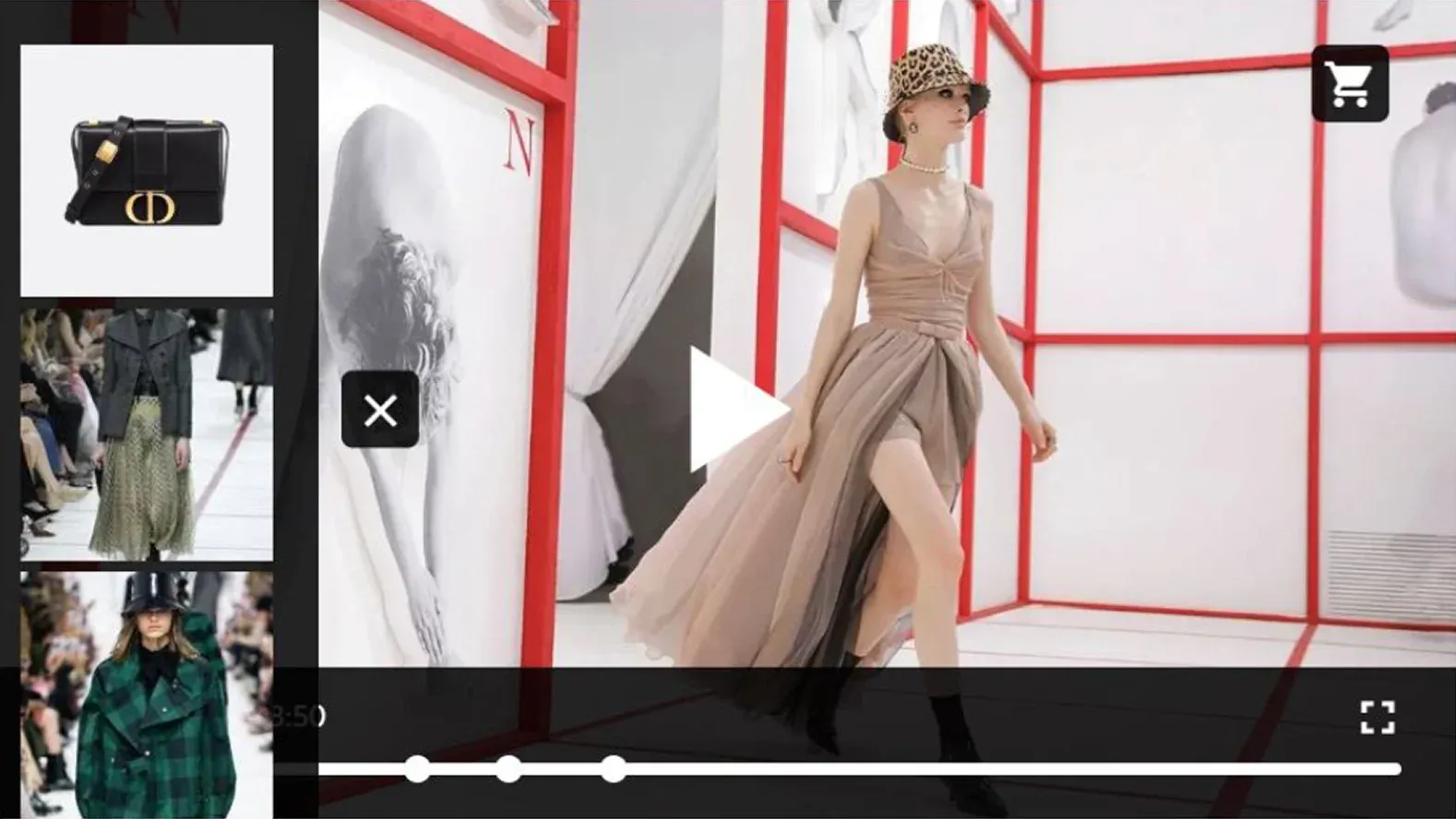
Another way of routing customers to the products they need involves integrating contextual commerce functionality into social media platforms. In this case, a computer vision system identifies products within uploaded image and video content, searches for similar items across partners’ online catalogs, and enables users to reach the corresponding product pages via embedded links. A prime example of a company reaping the benefits of these solutions is AiBUY, a US leader in shoppable media technology. The organization partnered with Itransition to develop a video commerce platform featuring computer vision-powered product recognition capabilities for contextual commerce.

Virtual try-on

Image title: A fashion show video with an overlay linking to mentioned products

Video surveillance

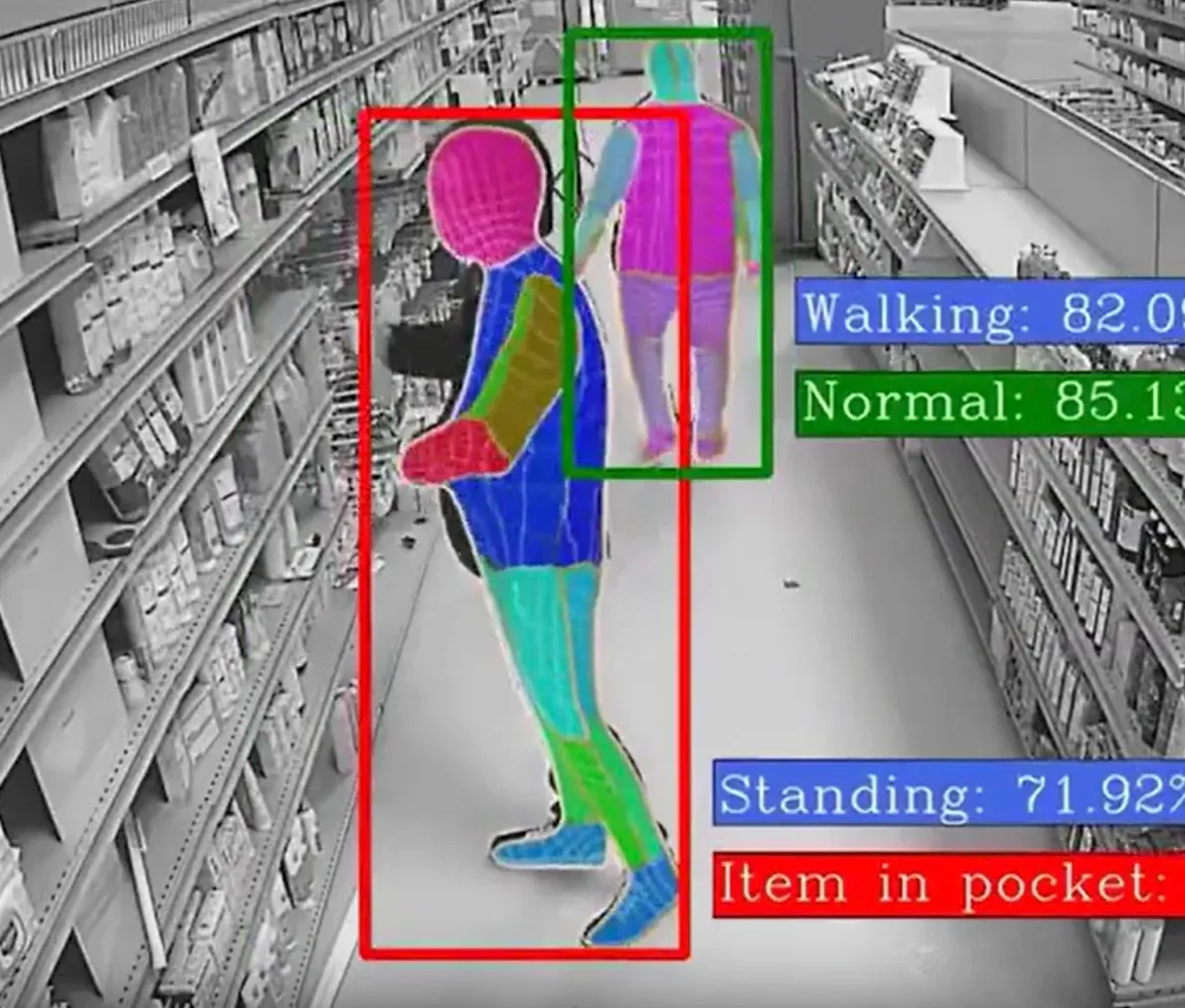
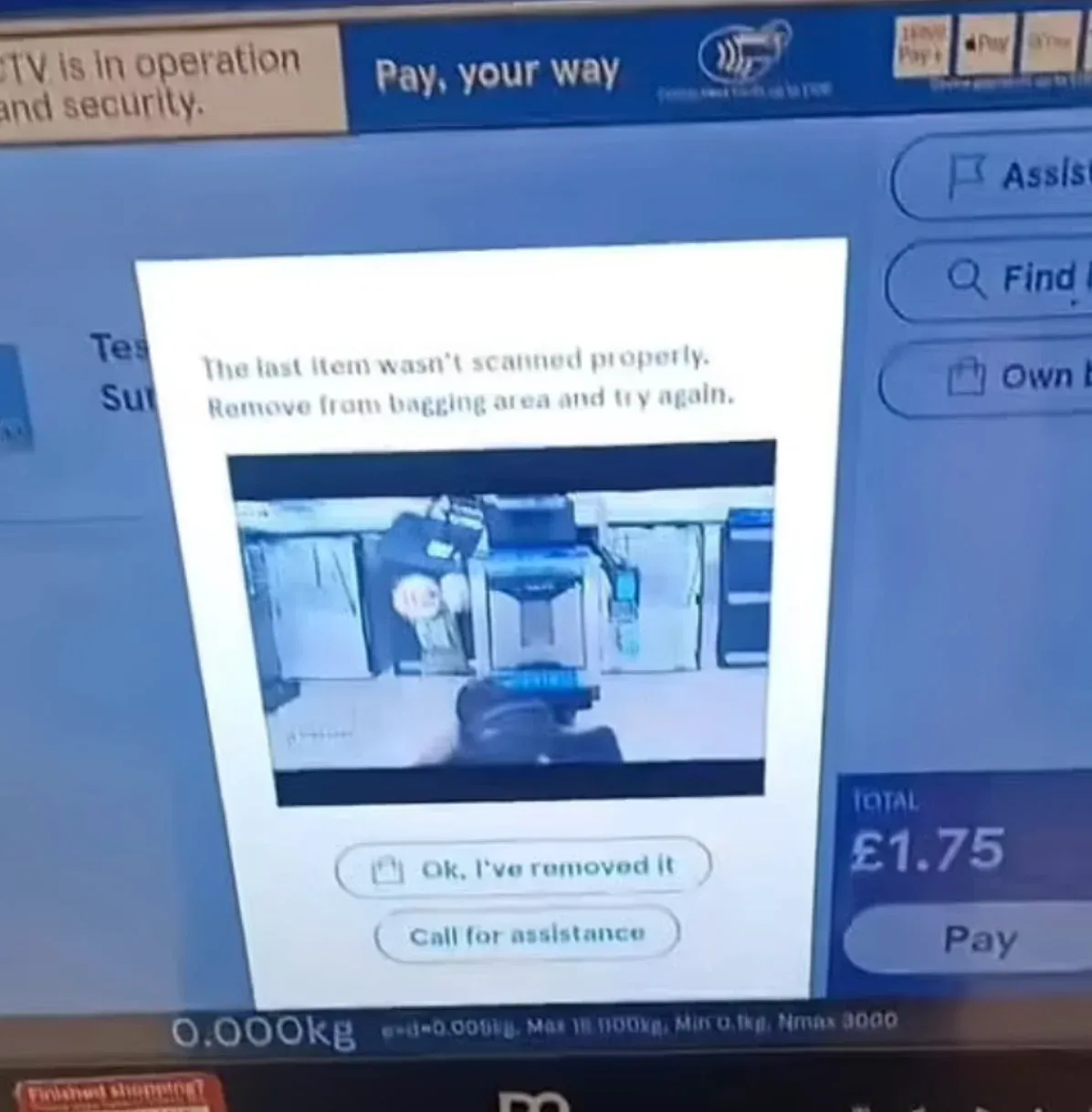
Computer vision technology is helping retail businesses ensure safer shopping environments without having to manually monitor stores 24/7. Along with more traditional object detection tasks, such as identifying intruders during closing hours, modern computer vision solutions can recognize complex behavioral patterns to detect shoplifting in real time. This involves detecting suspicious customer movements across store aisles, such as concealing items or unusually lingering near high-value products, to trigger an alert. Retailers can also deploy these artificial intelligence systems at self-service checkouts to detect unintentional or deliberate mis-scanning, typically by cross-checking the video feed with POS data.

Major retail chains, such as Tesco and Lidl, have recently implemented this type of solution, sometimes referred to as “supermarket VAR (video assistant referee)”, to address the growing number of shoplifting offences. However, thanks to the increasing accessibility of this technology, even small convenience stores can now adopt computer vision systems with relative ease.

Video surveillance

Image title: Computer vision-powered theft detection solution by Veesion
Image source: Veesion

Video surveillance

Image title: Tesco's mis-scanning detection system
Image source: Daily Mail

Enhance your retail operations with a computer vision solution by Itransition

Get in touch

Payoffs of adopting computer vision in the retail industry

Improved on-shelf availability

Ensuring shelves are always stocked and thus preventing lost sales due to out-of-stocks thanks to automated inventory management.

Increased staffing efficiency

Freeing up employees from time-consuming store operations and boosting their operational efficiency through automated shelf monitoring and cashierless checkout solutions.

Superior conversion rates

Driving sales conversions both in physical stores through optimized store layout and on ecommerce websites via virtual search and contextual commerce functionality.

Faster checkout

Eliminating or significantly reducing checkout wait times for more convenient shopping and maximum customer satisfaction by automating the checkout process.

Lower return rates

Reducing product returns by allowing customers to better evaluate fit and appearance during online shopping through virtual try-on technology.

Enhanced loss prevention

Minimizing retail shrinkage by detecting suspicious behavior to prevent theft through automated video surveillance systems.

How to address computer vision adoption challenges in retail

Concerns

Recommendations

Environmental constraints
Computer vision systems often operate in suboptimal conditions due to the dynamism and unpredictability of retail environments. For instance, poor lighting and frequent occlusion by customers or other products can reduce object recognition accuracy.

Rely on sensor fusion, namely a combination of multiple computer vision-powered cameras, weight sensing devices, and other sensors to better track customer-product interactions and overcome any potential environmental constraints.

IT infrastructure limitations
Retailers can use legacy systems, such as POS or inventory management software, which are difficult to integrate with modern computer vision solutions due to outdated communication protocols. Additionally, companies can lack sufficient bandwidth and computing resources to transmit and process visual data in real time.

Set up an enterprise service bus (ESB) serving as a middleware to convert different communication protocols and solve potential compatibility issues between existing systems and the new AI solution.

To address computing power limitations, instead of purchasing on-premises hardware, consider relying on computer vision services from leading cloud providers, such as Amazon Rekognition and Microsoft Azure Vision, to access scalable resources.

Furthermore, leverage edge computing to distribute processing workloads across in-store computer vision-powered devices, reducing bandwidth needs and preventing latency.

Privacy concerns
In many jurisdictions, video recording is governed by strict privacy laws, such as the GDPR in the EU. If a computer vision system tracks customers' features and movements without their explicit consent, it risks violating regulations on biometric data collection.

Use anonymization techniques, including real-time blurring on facial traits and other identifiers, at the camera or edge level before data is even stored or transmitted.

On top of that, follow the data minimization principle by avoiding collecting unnecessary biometrics, such as facial features for heat maps, and deleting video feeds immediately after analysis.

Computer vision consulting

Our consultants can guide you through every stage of your computer vision project for seamless solution implementation, providing assistance with business case development, AI readiness assessment, AI strategy development, and software adoption.

Computer vision development

We deliver high-performing computer vision solutions aligned with your unique business needs and retail industry’s requirements, taking charge of software design, front-end and back-end development, rollout, and user onboarding.

Looking for a reliable computer vision development partner?

Turn to Itransition

Maximizing the value of computer vision in retail

Over the past decade, the role of computer vision in retail has grown steadily thanks to advances in machine learning technology, which have opened new avenues for improving the customer experience and streamlining key retail operations. Modern computer vision solutions powered by ML algorithms can recognize customers’ complex behavioral patterns to interpret their intent, as well as accurately identify products even in non-ideal operating scenarios.

Businesses can further amplify computer vision’s potential by combining this technology with other AI-powered tools, such as retail predictive analytics. For instance, visual data like foot traffic can complement historical sales data, enabling retailers to forecast future sales trends with superior accuracy and optimize their supply chain operations accordingly.

To unlock and fully leverage these capabilities, build powerful computer vision solutions tailored to your needs with an experienced IT partner like Itransition.

Machine learning in retail: use cases, examples & adoption guidelines

Insights

Machine learning in retail: use cases, examples & adoption guidelines

Explore key applications, real-world examples, and benefits of machine learning in retail, along with best practices to facilitate its implementation.

BI platform with AI and computer vision for a fashion retailer

Case study

BI platform with AI and computer vision for a fashion retailer

Learn how Itransition delivered retail BI and deployed an ML-based customer analytics solution now processing 10TB of data.

Machine learning in ecommerce: use cases, trends & best practices

Insights

Machine learning in ecommerce: use cases, trends & best practices

Discover top applications, real-life examples, and key trends of machine learning in ecommerce, along with some best practices to streamline its adoption.

Business intelligence in the retail sector: main use cases, benefits & platforms

Insights

Business intelligence in the retail sector: main use cases, benefits & platforms

Discover how your retail company can benefit from business intelligence software by exploring its key features, common integrations, and best platforms.

Virtual stores: an end-to-end solution overview

Insights

Virtual stores: an end-to-end solution overview

Explore how virtual stores bridge the gap between online and in-store shopping, helping retailers better engage with customers through immersive experiences.

Virtual shopping assistants: an in-depth overview for retail businesses

Insights

Virtual shopping assistants: an in-depth overview for retail businesses

Discover the use cases, trends, real-life examples, and payoffs of virtual shopping assistants, along with implementation challenges and tips to overcome them.

Ecommerce CRM: functionality, best platforms & selection tips

Insights

Ecommerce CRM: functionality, best platforms & selection tips

Discover key capabilities, integrations, and benefits of ecommerce CRM software, along with the best CRM platforms for this industry and selection tips.

Salesforce for retail: features, success stories & payoffs

Insights

Salesforce for retail: features, success stories & payoffs

Explore retail-specific Salesforce functionality and other valuable capabilities for this industry, along with real-life implementation examples and benefits.