Services
SERVICES
SOLUTIONS
TECHNOLOGIES
Industries
Insights
TRENDING TOPICS
INDUSTRY-RELATED TOPICS
OUR EXPERTS
December 19, 2025
By connecting classroom smart devices, such as smart whiteboards, projectors, and tablets, into a unified IoT network, schools can transform traditional learning spaces into immersive learning environments. IoT-enabled devices can gather and automatically exchange information in real time, such as synchronizing activity logs from smart boards and tablets for automated student engagement level and progress tracking, to help teachers adapt the lesson to students’ individual needs and increase their involvement and motivation.
Implementing IoT-enabled ID card systems and biometric scanners, educational institutions can automate student attendance tracking. When a student enters the building, the IoT access control system automatically scans their ID information and transmits it to the attendance system. These smart tracking systems allow schools and universities to monitor student attendance in real time, eliminating the need for manual recording and reducing administrative burdens.
Connected IoT classroom sensors and student wearables collect real-time data on students' learning habits, attendance, and physical activity. Processing this data with the help of learning management systems equipped with ML models, teachers can build a comprehensive view of each student's progress, learning habits, and behavior patterns to identify problem learning areas and adapt curriculums to their needs, as well as determining the most effective teaching methods or educational resources to improve learning outcomes.
By installing RFID tags and GPS trackers on assets like laptops, tablets, books, and laboratory equipment, education facilities collect real-time data on their location, condition, and usage and upload this information to the asset management platform and library database. This enables educational institutions to track and manage valuable assets more effectively and better plan their repairs and replacement.
Connected HVAC equipment can gather real-time data on energy consumption, temperature, lighting, and other parameters across university or school premises. By analyzing this data with the help of a building management system, education organizations can identify areas with overconsumption and suggest corrective measures to optimize their use and management. Thus, the application of IoT helps educational institutions improve energy efficiency, maintain closer control over resources, and cut down on operating costs.
Motion sensors, cameras, and access control systems, combined with biometrics scanners and smart ID card readers, can enhance campus safety by helping monitor facilities for suspicious activity, entry attempts, and hazardous situations. By processing IoT data in a centralized security platform, education organizations can promptly identify threatening situations, send emergency notifications to students and staff, and maintain a safe learning environment.
Cisco’s Board Pro G2 is an integrated video device and collaboration board designed to bridge the gap between in-room and remote participants that supports hybrid learning and collaborative work in both corporate and educational environments. This all-in-one device combines cameras, built-in microphones, speakers, and a high-resolution interactive touchscreen. It also features AI capabilities that make collaboration more immersive by providing such features as automatic framing, noise suppression, and speaker tracking, enhancing video conferencing quality and audio during users’ interactions.
The Board Pro G2 supports the installation of various collaboration software, such as Webex, Microsoft Teams, and Miro, and allows users to easily switch between them without interrupting the flow of lessons. It also integrates securely with the Webex Cloud, allowing IT staff to push software updates and track usage analytics via Cisco Control Hub.
The Swedish company Virrata AB provides the C-Pen Reader 3, a smart pen-scanner device. It facilitates optical character recognition and scans printed text, converts it to digital text, and reads it aloud using a natural-sounding text-to-speech (TTS) function. The device can provide definitions to words from built-in dictionaries and supports multilingual out-loud reading and translation of text into other languages when connected to Wi-Fi. It can also store scanned text and audio in its memory and connects to devices, such as computers, tablets, and smartphones, via Wi-Fi and Bluetooth, allowing users to automatically upload scanned text to their cloud storage and access and share their notes to any device. The solution is particularly useful for people with reading difficulties, such as dyslexia, and for language learners, helping them read, listen, and understand printed text more effectively.
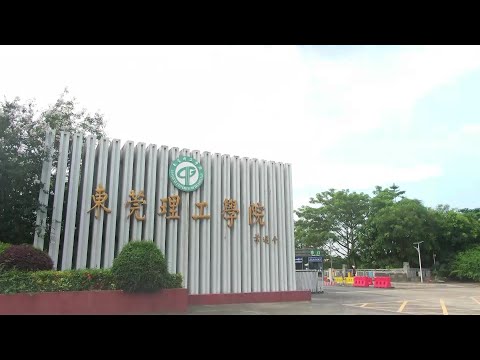
Dongguan University of Technology (DGUT), in collaboration with Huawei, implemented IoT-enabled smart and modern classrooms across their campus to create a hybrid and interactive learning environment and improve the quality of teaching and learning. These classrooms are equipped with Huawei's smart devices, including IdeaHub displays, modern interactive panels, cameras, microphones, recording systems, and IoT sensors, with connection enabled by a high-bandwidth network and data integrated to dedicated cloud storage platforms.
Such classroom infrastructure enables more interactive teaching with features such as multiscreen display, automatic course recording, and AI-based learning and student result analysis. Additionally, the system supports hybrid learning models, enabling teachers to prepare and deliver lessons, organize assignments, and conduct assessments simultaneously in-person and online. As a result of implementing smart classrooms, the university saw student engagement increase by 62%, while the average number of online on-demand courses per semester grew by 60%, and teaching quality improved by 55%, with classroom management efforts reduced by 80%.
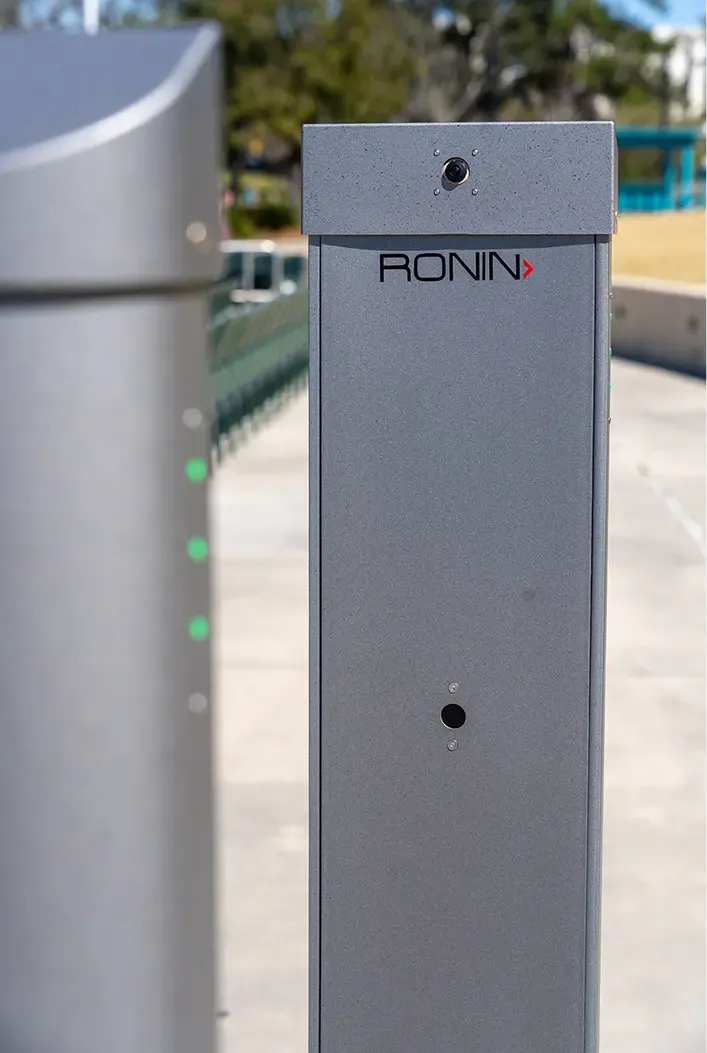
Schenectady High School in New York implemented the RONIN system from MIS Security company as part of its advanced security measures to enhance student and administrative safety. The RONIN threat detection system uses multi-sensor technology to identify both violent threats, like firearms, knives, and explosives, and non-violent threats, like recording devices, as visitors pass through security gates without requiring them to slow down, empty their pockets, or undergo invasive screening. RONIN's proprietary sensors and signal processing algorithms allow it to pinpoint the location of suspicious items on a person in real-time and send instant alerts to security personnel’s mobile or desktop apps. This system helps the school improve campus security by alerting administrators of potential security risks, thereby creating a safer learning environment for everyone.
Image title: RONIN as an intelligent reliable weapon detection
Image source: MIS
Security
The implementation of IoT in the education system allows institutions to significantly improve their administrative and education processes and brings a myriad of benefits to both students and teachers.
IoT enables real-time student collaboration and interaction between physical devices and digital learning platforms, providing teachers with insights into student progress and facilitating more personalized student engagement.
With IoT-based solutions in place, schools can automate various time-consuming administrative tasks, such as attendance tracking and school resources management, allowing teachers to focus more on interacting with students.
By using IoT capabilities and connected devices like interactive whiteboards, tablets, and smart projectors, teachers can create more engaging and interactive lessons that keep students interested and motivated, leading to better learning outcomes.
IoT systems help administrators manage educational resources, like textbooks, school supplies, lab equipment, and laptops, more efficiently through automated inventory tracking and real-time condition monitoring. This allows schools to prevent asset loss or theft and save on operational expenses.
While IoT implementation offers significant advantages for the educational sector, it is fraught with various challenges, which educational facilities can address in advance to increase their solution’s effectiveness and ROI.
Challenge | Solutions | |
|---|---|---|
High implementation costs |
Initial costs associated with IoT solution implementation and staff training can be high and therefore
prohibitive, particularly for institutions with limited budgets, hindering IoT adoption.
| To lower IoT implementation costs, education facilities should opt for cloud solutions for data storage, processing, and analytics, as they allow paying only for the resources companies use and avoid developing and maintaining a dedicated software infrastructure. Additionally, institutions can adopt open-source IoT platforms or solutions that eliminate licensing fees and allow for flexible customization without dependence on a single vendor. |
Data security & privacy |
The introduction of an educational Internet of Things ecosystem can create additional data security risks
by expanding the institution’s threat landscape.
|
Education establishments need to equip different levels of the IoT infrastructure with suitable data
privacy and security mechanisms, including but not limited to end-to-end data encryption, multi-factor
authentication, role-based access controls, network segmentation and implement real-time security
monitoring solutions for threat detection. Additionally, education IoT adopters should regularly install
software and device firmware updates and conduct security risk assessments. |
Infrastructure limitations |
Many education facilities, particularly those in rural regions, can experience unstable or low-speed
internet connection and insufficient network bandwidth, which can undermine the value of IoT
implementation.
| To overcome problems with internet connectivity, education companies can use satellite internet services like Starlink to get access to high-speed, low-latency broadband internet connection. In addition, these institutions can implement dedicated servers to process IoT data locally if needed and reduce network latency, minimize bandwidth usage, and ensure stable operation even during internet outages. |
Resistance to change |
The adoption of IoT initiatives in educational settings can be impeded by resistance from administrators
and teachers fearing potential disruptions in their established teaching processes.
| To make the adoption of the new IoT system as smooth as possible, education organizations need to provide comprehensive user guidance, training educational materials, workshops, and dedicated support to help employees get acquainted with the new technology. In addition, regularly collecting feedback from educational staff also helps educational institutions better understand adoption challenges and efficiently resolve them. |
The impact of the Internet of Things on the future of the education sector is expected to be profound, with the technology reshaping how students learn, professors teach, and educational institutions operate. Below are key IoT market statistics and trends that demonstrate its growing influence on education.
| The global IoT in EdTech market size is forecast to reach around $92 billion by 2034, growing at a CAGR of 24.30% between 2025 and 2034. | |
|---|---|
| North America leads the IoT market in EdTech, accounting for over 41.8% of the market share in 2024, with revenue growing sharply to $4.3 billion and expected to increase in the future. |
Scheme title: Global IoT in education market from 2025 to 2034
Data source: Market.us
| The US market for IoT in the education sector is expected to reach $32.17 billion by 2034. | |
|---|---|
| The IoT in education market displays a diverse application landscape, with class rooms taking the leading segment in terms of IoT solutions penetration, followed by learning management systems, performance tracking solutions, and virtual labs, and their growth is expected to continue in the next ten years. | |
| In the IoT education market, hardware is the dominant component, followed by services, software, and platforms, and will remain so in the nearest decade. | |
| The IoT in education market is driven by K-12 schools, which form the largest end-user segment, followed by higher education institutions and corporate and vocational training centers, and their growth is expected to continue in the near future. |
Scheme title: IoT in education by end user from 2025 to 2035
Data source: Market
Research Future
| In the Internet of Things education market, cloud computing occupies a leading position in the technology segment, followed by artificial intelligence, big data, and mobile applications. |
|---|
Scheme title: IoT in education by technology from 2025 to 2035
Data source: Market
Research Future
Most educational institutions today support hybrid learning, allowing their students to participate in simultaneous learning from both classroom and virtual environments to better meet students’ needs and preferences and cater to different learning styles. IoT technology plays a huge role in facilitating hybrid learning by enabling real-time attendance tracking, personalized feedback, and remote collaboration, ensuring that both in-person and virtual students receive an equally engaging and effective educational experience. In the future, we’ll likely see more education facilities implement the hybrid learning format.
The combination of IoT with AR/VR technologies is gaining popularity, allowing education facilities to create an immersive learning environment and enable students to develop practical skills in simulated yet realistic settings. Virtual reality enables students to interact with digital objects in real-time, for example, in virtual science labs or surgical operations simulations. The technology uses data from IoT sensors (pressure, temperature, vibration) to visualize various objects or processes in a virtual environment. This integration not only increases student engagement and facilitates knowledge retention but also ensures a safer elearning environment, which makes it irreplaceable in the future education landscape.
Assistive technologies, such as hearing aids and smart pens, help students with physical, sensory, and cognitive disabilities actively participate in learning activities. IoT technology facilitates the collection and sharing of data on students’ interaction patterns and accessibility needs from these devices, allowing educators to ensure equal participation for all learners. While this field is still developing, in the future we’ll see an even wider application of IoT for enhancing education’s accessibility and inclusivity.
Educational institutions can implement different connected devices across their facilities and classrooms depending on their use cases, with the most popular choices being:
The cost of an IoT software development project in the education sector ranges from $10,000 to over $200,000 and depends on various factors, including the functionality of the IoT solution, the size and qualifications of the development team, customization and integration requirements, and the scope of post-launch support. If you need an estimate for your IoT development project, Itransition’s consulting specialists can help you calculate a feasible budget.
Implementing a simple IoT solution can take four-five weeks, while developing a complex, enterprise-grade IoT platform can take six months or more. The timeframe for IoT solution development depends mainly on the IoT use case, project scope, and the future solution’s functional and non-functional requirements.
To implement IoT technology, educational facilities should start by determining the goals and improvements they want to achieve with the technology. Then, they need to determine the most suitable IoT use cases, define solution requirements, and create a detailed IoT solution plan that outlines what needs to be done, when, and by whom. After that, educational organizations should design IoT solution architecture, develop an MVP and perform solution deployment.
It's also recommended to begin IoT implementation by developing a pilot solution first to test it in small-scale real-world settings, as well as conduct comprehensive staff training post-implementation to teach them how to effectively utilize the new technology.
Service
Professional IoT development services to deliver IoT solutions that efficiently manage the network of connected devices and generate real-time insights.
Service
Itransition offers IoT consulting services to provide businesses expert guidance through their IoT projects and ensure the solution’s efficiency and high ROI.
Insights
Learn about the architecture, main benefits, use cases, and prominent real-life examples of IoT data analytics and explore a detailed implementation guide.
Insights
Itransition shares a detailed structure of a typical IoT architecture and describes essential elements and factors to consider when choosing an IoT solution.
Service
Itransition helps industrial companies implement secure IoT systems for production control, predictive asset maintenance, and effective supply chain management.
Insights
Discover how IoT can help manufacturers optimize supply chains, energy management, enhance inventory management, improve product performance, and boost revenue.
Insights
Explore 35 IoT use cases across various industries, top market statistics for 2025, and best practices for IoT adoption.
Insights
How to achieve unfailing IIoT security? Explore the most common threats and develop a feasible strategy to effectively overcome them.